Kate Schrock Biography
& History
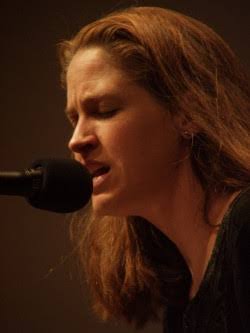
BIO BRIEF: Kate Schrock has spent years touring across the US, playing in venues big and small, and releasing seven critically-acclaimed albums from studios in Portland ME, Hamilton ON, and Nashville TN. Throughout her career in song and performace, she has combined the natural and the ephemeral, the emotions and ideas of life in modern times, mixing elements of evocative pop, reggae, spirited rock, and other influences gathered after a life on the road.
Now, she has returned to her roots in Downeast Maine, where she’s rediscovering peace and connection while raising her son and embracing her coastal heritage.
A singer, songwriter, and multi-disciplinary visual artist, Stereophile Magazine declares, “her acoustic presence is startling, the powerful acoustic bass roils my soul. There’s an amazing sense of clarity, totally pristine yet liquid and musical.”
Kate is presently preparing the relaunch of her website and social media channels, as well as accepting visual art commissions for Winter 2026/27.
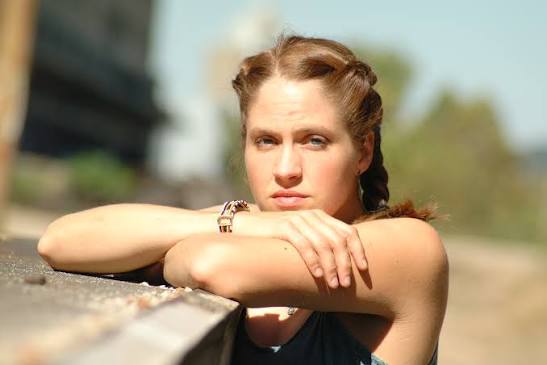
Raised on the coast of Maine (father a herring fisherman-playwright, mother a grade-school special ed teacher), Kate Schrock left home at 16, finished high school at the Putney School in Vermont, and then headed to New York City and Paris where she spent nearly 2 years working as an accidental fashion model. Kate began reading Dostoevsky and Nietzsche on park benches between go-sees in le Jardin Du Luxemburg, and sneaking into the back rooms of piano stores on Av du Maine to work on her secret life as a bad poet and budding songwriter.
Inspired by the evocative work of independent filmmaker Wim Wenders who Kate met serendipitously, and a synchronistic day spent together with Bill Murray walking the perimeter of Paris and swapping wild life stories. In a moment of clarity, Bill told her, “you are a writer, Kate! Go to the Greek Islands and so some soul searching”. She took Bill’s advice and took a leap of fate – quit the fashion ‘biz’, & after a short stint in LA opted to immerse herself in the heady waters of philosophy and art.
At the University of Chicago, she fronted 1/2 A Boy’s Life & then Sin Embargo, Velvet Underground-like bands in Hyde Park, and worked on and off quite happily for an unglamorous $6 an hour as maintenance person at the national headquarters in Elgin for the Church of the Brethren. Kate’s next journey took her to Bennington College where she studied performance and visual art while jamming with the jazz students who attended there.
After completing college, Kate moved into a burned-out apartment building in Times Square and began performing in small clubs in the East Village and Bleeker Street to audiences oftentimes consisting solely of her friend Bob. When the riots in Los Angeles caused her concern about safety in the NY urban jungle, Kate ventured back to Maine where she discovered a thriving music scene in Portland and began work on her first album, Refuge, which she released in 1994.
Systemically restless, Kate returned to Chicago in 1996 where she released her second album Shunyata (in 1997) a dynamic recording effort that caught the attention and ears of the audiophile community and was voted a “record to die for” by Stereophile Magazine. It was on the strength of these two albums and Kate’s inspired live performances that Famous Music Publishing signed her in 1998. It was shortly thereafter that Zero Hour Records positioned themselves to release Kate’s first national album, “Shooting Up On Faith,” but declared bankruptcy just weeks before the record was scheduled to hit the racks. With the wind temporarily out of her sails, Kate came off the road and landed in a 200-year-old farmhouse barely 3 miles from where she grew up as a child in Maine.
Uninspired and tired, Kate received a much-welcomed visit from long-time friend Dave Rave, former lead singer for the Canadian punk band Teenage Head. His presence at the farm helped to remove the jinx of a writing block with which she’d been wrestling. This unleashed the material that would eventually appear on her third album Dames Rocket, which she once again released independently on her own label. In support of this new album, Kate began to make her way again around the U.S. tour circuit until the aftershock of 9-11dampened the live performance landscape. This sparked Rave to revisit Schrock at her farm in Maine, and with the able assistance and talents of Glen Marshall, a studio engineer and protégé of Brian Eno and Daniel Lanois, they put together the blueprint for her fourth album Indiana.
Indiana was recorded in 4 days in a church-turned-studio in Hamilton, Ontario. It features Juno award winner Tom Wilson (Blackie and the Rodeo Kings) on “If Loving You”, a hauntingly heart-wrenching duet penned by Schrock, Rave and Marshall. Rave also contributed his unique vocals to “Need”, and to the title track, “Indiana.” The rest of the band playing on the album is a veritable “who’s who” of the Hamilton music scene, and features Ray Farrugia on drums (Junkhouse), Keith Lindsey on keyboard and accordion (Daniel Lanois), Bill Becker on guitar (Ponderoo), and Peter Rhibany on bass (Motown).
In 2003, Schrock and Rave hit the road in support of Indiana and Rave’s own Everyday Magic album. It was at the last show of their tour that Kate met Glen DaCosta and began the work on Invocation.
Schrock’s sixth independent release on her own Kakelane Music label, Invocation fully embodies her trademark blend of jazz and rock gospel, while also stirring hearty portions of reggae and dancehall elements into the mix. Invocation is co-produced by Grammy-nominated engineer/producer Steve Drown, and features brother Nate Schrock, frontman for the alt-country band The Coming Grass, and his guitarist, Steve Jones. DaCosta’s recognizable melodic horn stylings give the record a definitive feel. The album also features bassist Anne Deck and drummer Ginger Cote, both long-time members of the band, as well as introduces Jeff Rojo, Marc Chillemi, and Dominica-born Rastafarian musician Nyah Henderson.
In fall of 2010 Schrock and frequent drummer/collaborator Todd the Rocket released a live EP of songs recorded earlier that year at the former Port City Music Hall in Portland, Maine. “PCMH” received positive local and regional press, and the release was celebrated by a collection of theater and listening room shows with Schrock, Todd the Rocket, and saxophonist Glen Dacosta.
In September 2015, after decades of creating and performing music drawn from an eclectic mix of influences and unique collaborations, Schrock returned to the basics for her album, “Kor.” Recorded in 2 days at RCA Studio A in Nashville, this retrospective release is a scaled-down version of the intro- and outro- spective music Schrock has performed throughout her 20-year career; a solo acoustic album that celebrates the tools Schrock built her career with – her piano and her voice.
Lyrically and topically, Kate takes a direct approach when tackling such provocative topics as war, injustice, poverty and the ills of commercial over-development. But a huge part of her talent and dexterity as a songwriter is her seemingly effortless ability to inject a subtext of calmness into her songs. This in turn allows her listeners to tap into the special kind of energy one discovers when teetering between the zones of outrage and forgiveness, and she accomplishes all of this without having to redirect any of the less-than-flattering light she likes to cast upon the burdens and challenges of love and spiritual health that exist in what most would agree are especially perplexing times these days. With her unique knack for pulling off this emotional kind of balancing act, this perspective demonstrates why Billboard Talent Net has proclaimed Kate Schrock to be “one of the best unsigned artists in the U.S.”
Kate Schrock on Youtube
Kate Schrock Media Quotes

Schrock’s “Shunyata” is a “record to die for”
“Schrock’s voice emanates from a resonating chest and head that’s attached to all the naughty bits. Her acoustic presence is startling, the powerful acoustic bass roils my soul. There’s an amazing sense of clarity, totally pristine yet liquid and musical.”
At the end of “Call the Ghost,” listen to the backing female chorus that rides the tune into the fadeout. Notes: “The vocals are incredibly sexy, velvety smooth, silky, and textured. Schrock is terrifically adept at harnessing classic rock rhythms in an updated and modern fashion. The lyrics are romantic, strong, and intelligent, her voice steeped in their meaning. It’s the kind of album that makes me reach for the booklet, happy to find the lyrics within.”

Schrock “pushes the bounds of the usual hook-driven pop song. Sagacious and penetratingly honest tone of writers such as Joni Mitchell,”

“Schrock is laying down some of the most thought-provoking lyrics to come out of the recent evolution in rock music. Schrock’s blend of rock, jazz, gospel and pop fuses under her voice, which soars and swoops with a quiet, yet powerful authority, defining her talent well above the other piano wielding singers pithily invading the nation.”